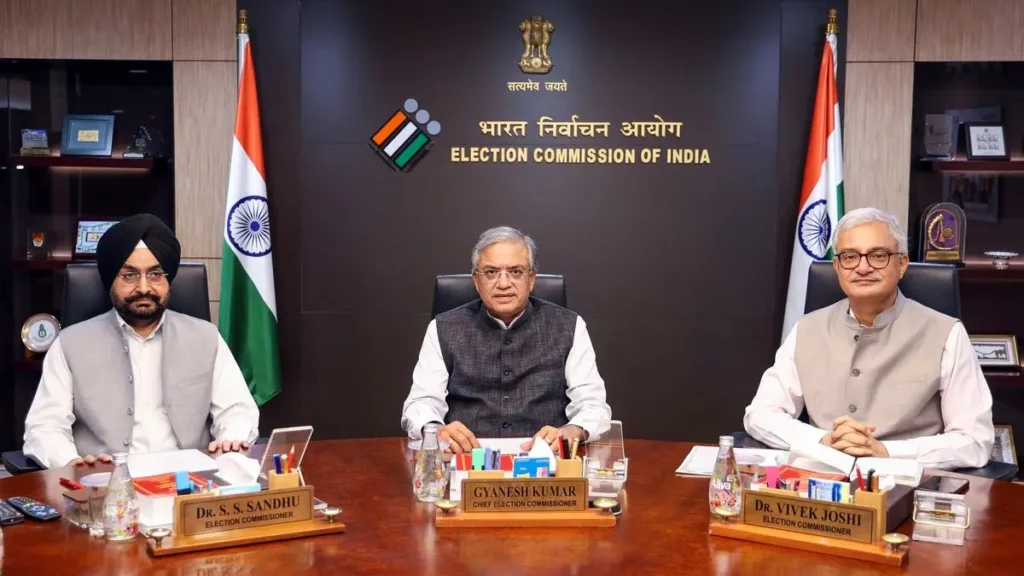
The Election Commission of India has a paradoxical constitutional task. It must make the rules and procedures of elections sufficiently certain that the outcome remains genuinely uncertain. The political scientists Ujjwal Kumar Singh and Anupama Roy use this tension between “procedural certainty” and “democratic uncertainty” to explain the commission’s place in India’s electoral order (Election Commission of India: Institutionalising Democratic Uncertainties, 2019, Oxford University Press).
That formulation also exposes the commission’s accountability problem. The commission must be insulated from governments and parties because they have an immediate stake in elections. Yet decisions taken in its name determine who gets on the electoral roll, what information voters must provide, and how electoral administration works. Independence protects the referee from the players. Accountability asks whether the referee acts through rules, reasons, and procedures that can be examined.
The constitutional scholar Tarunabh Khaitan places electoral commissions among “guarantor institutions”, bodies created to protect constitutional norms that ordinary political institutions may have incentives to weaken. Their effectiveness, he argues, depends on expertise, independence, and accountability working together (“Guarantor Institutions”, 2021, Asian Journal of Comparative Law, Cambridge University Press on behalf of the National University of Singapore).