The movement’s leaders connect education, jobs and institutional accountability, and point to early successes. But critics question whether the CJP can take on so many causes, or whether its expanding agenda signals political ambitions.
Since the extraordinary success of the protest led by the Cockroach Janta Party (CJP) ended with the resignation of Union Education Minister Dharmendra Pradhan on July 25, its members and supporters had been focussed on auditing government schools across the country, exposing shortfalls and demanding reforms. That work paused on September 24, when the CJP held a press conference on alleged irregularities in the Election Commission of India (ECI) over the Special Intensive Revision (SIR) of electoral rolls.
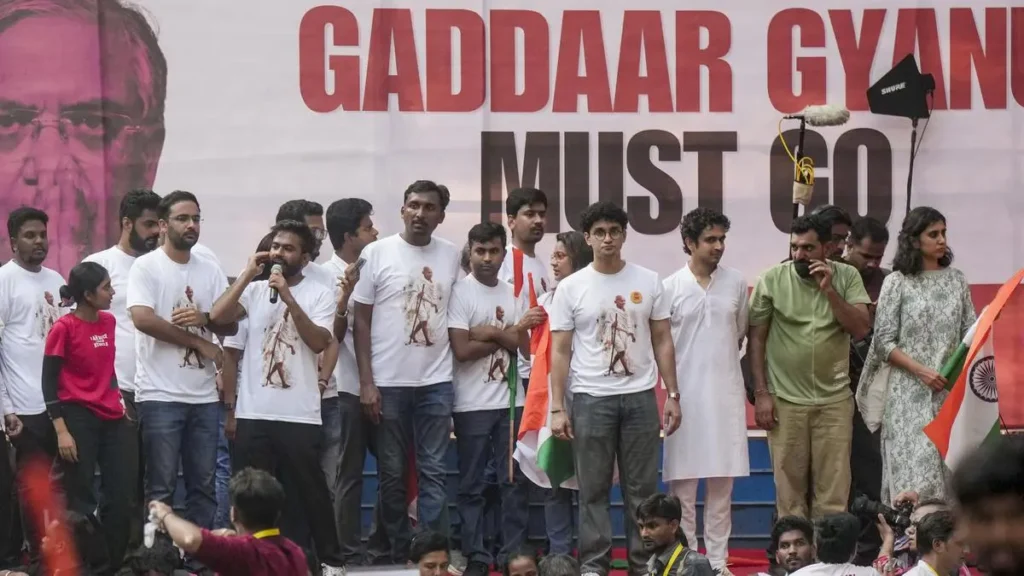
CJP founder Abhijeet Dipke and co-convenors Ashutosh Ranka and Saurav Das launched the “Election Commission Thik Karo” (Reform the Election Commission) campaign. It was the first time the CJP stepped out of its primary domain of education to champion a cause in another sphere. It issued a 48-hour ultimatum demanding the resignation of Chief Election Commissioner Gyanesh Kumar.
The following week, the CJP held a protest at Mumbai’s Shivaji Park, scheduled symbolically for October 2, Gandhi Jayanti, and called it a Jail Bharo Andolan (fill the jails movement) when the Mumbai Police denied permission.